
Supporting Young Children with Complex Trauma - What We Caregivers Can Do
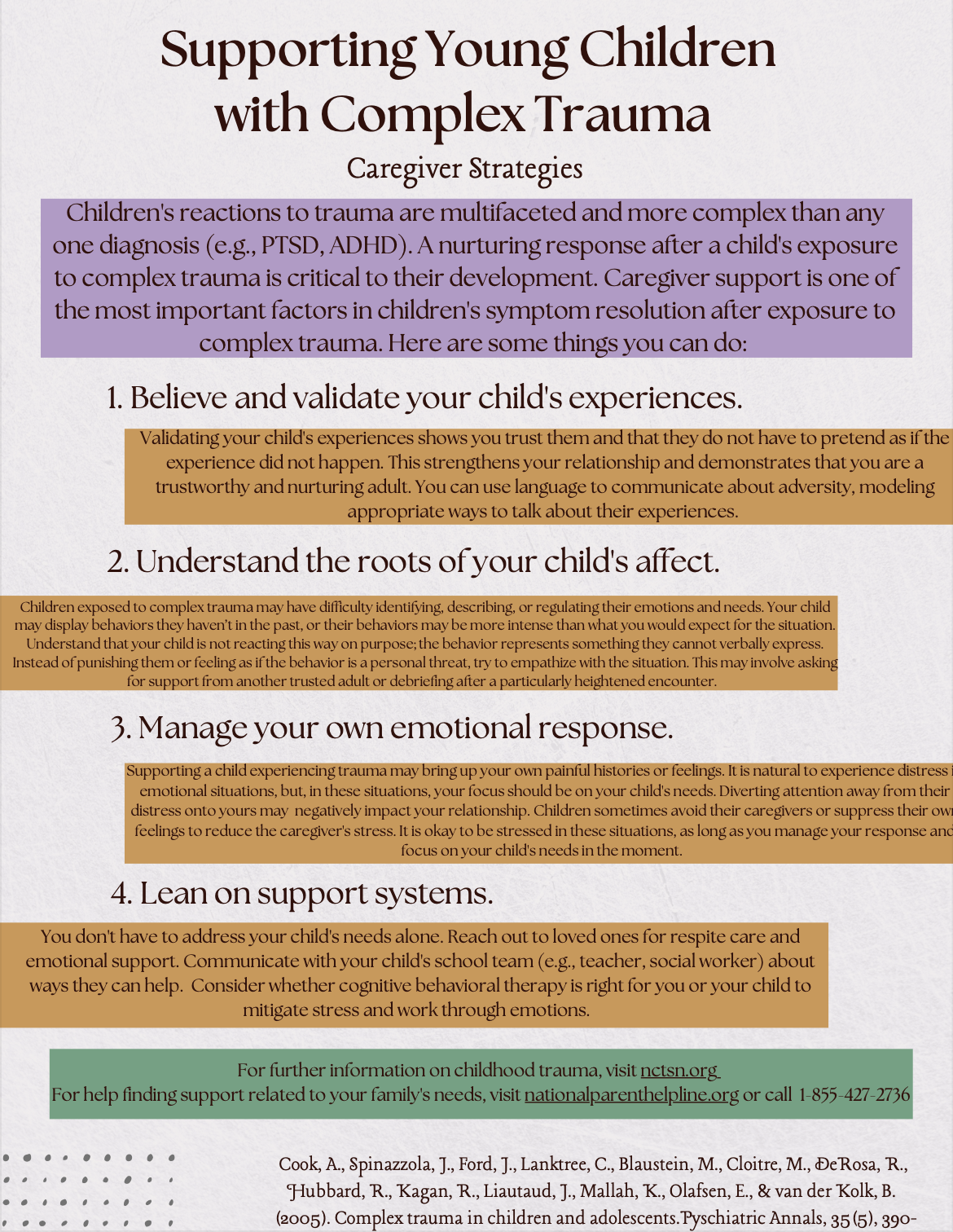
Children's reactions to trauma are multifaceted and more complex than any one diagnosis (e.g., PTSD, ADHD). A nurturing response after a child's exposure
to complex trauma is critical to their development. Caregiver support is one of the most important factors in children's symptom resolution after exposure to
complex trauma. Here are some things you can do:
1) Believe and validate the child's experiences.
Validating the child's experiences shows you trust them and that they do not have to pretend as if the
experience did not happen. This strengthens your relationship and demonstrates that you are a
trustworthy and nurturing adult. You can use language to communicate about adversity, modeling
appropriate ways to talk about their experiences.
2) Understand the roots of the child's affect.
Children exposed to complex trauma may have difficulty identifying, describing, or regulating their emotions and needs. The child may display behaviors they haven’t in the past, or their behaviors may be more intense than what you would expect for the situation.
Understand that the child is not reacting this way on purpose; the behavior represents something they cannot verbally express. Instead of punishing them or feeling as if the behavior is a personal threat, try to empathize with the situation. This may involve asking
for support from another trusted adult or debriefing after a particularly heightened encounter.
3) Manage your own emotional response.
Supporting a child experiencing trauma may bring up your own painful histories or feelings. It is natural to experience distress in emotional situations, but, in these situations, your focus should be on the child's needs. Diverting attention away from their distress onto yours may negatively impact your relationship. Children sometimes avoid their caregivers or suppress their own
feelings to reduce the caregiver's stress. It is okay to be stressed in these situations, as long as you manage your response and focus on the child's needs in the moment.
4) Lean on support systems.
You don't have to address the child's needs alone. Communicate with other members of the school team (e.g., teacher, social worker) about
ways they can help. Encourage parents to reach out to loved ones for respite care and emotional support. Consider whether cognitive behavioral therapy is right for you to mitigate stress and work through emotions.
Complex trauma affects many children, and it disproportionately affects children with disabilities. These strategies can help you care for a child who has experienced (or you suspect they have experienced) complex trauma. Use the image above as a handout for families if needed!
