
Seamless Shifts: Culturally Responsive Approaches to Early Childhood Transition
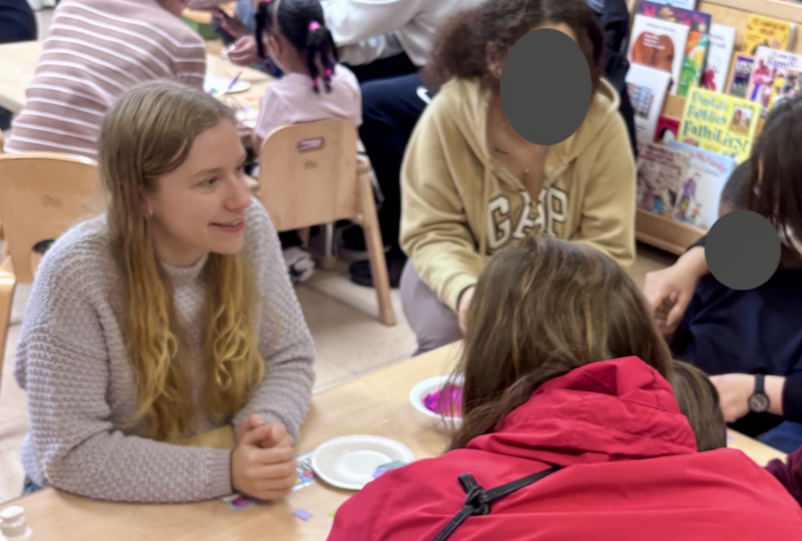
Students who receive special education services will transition into new settings, such as from early intervention (EI) to preschool or from preschool to elementary school (IDEA, 2004). We as teachers can use a variety of strategies to promote students’ success during transitions. Students and families who have been made most marginalized (e.g., LGBTQ+, Indigenous, immigrant) especially benefit from varied strategies, as the typical structure of transitions may not be supportive for all families (Starr et al., 2016). We can use culturally responsive practices before, during, and after transitions. Here are some strategies I have found helpful:
Advocate for native language supports. Students and families whose primary language is not English are legally entitled to various supports to facilitate communication and measure students’ true abilities (United States Department of Education & United States Department of Justice, 2015b). You can let families know of their rights to request these supports and consult with other practitioners to ensure these are met. You may also remind families that they can bring advocates, other family members, or friends to IEP meetings with them. Some families may feel most comfortable having a bilingual family member with them, while others would prefer to represent themselves or utilize district-provided interpreters. According to the US Department of Education (United States Department of Education & United States Department of Justice, 2015b), families with limited English proficiency have the rights to have:
Interpretation services from a qualified interpreter during IEP meetings.
Students’ assessments conducted in their native language.
Considerations for the student’s language needs written into the IEP (American Speech-Language-Hearing Association, 2023).
Ask open-ended questions to learn about families and students. Families who have been made most marginalized are as committed to supporting their students’ transitions to new settings as other families, though educators may not understand the extent of their commitment (Jarrett & Coba-Rodriguez, 2019). To more fully understand families’ priorities and practices related to their students’ transitions, I ask open-ended questions rather than assuming they know what families are doing (Illinois Early Learning Project, 2018). You may ask:
How are you preparing your child for _____?
What are your priorities for your child when they begin at ______?
How can we (practitioners) help you and your child prepare for ______?
Celebrate cultural assets and community contexts. All families approach education with unique contexts and strengths, many of which we may be unaware of unless they intentionally explore them. Teachers should learn more about families’ community contexts, which may occur through self-learning or asking families directly about their communities. Further, sometimes a family’s dynamic differs from our own. Thus, we must intentionally recognize these differences as assets rather than detriments. For example, if a parent tells me they would like to discuss an IEP meeting with their family before signing the documents, I can consider how this family informs one another and makes decisions together. I can remind myself of this asset as well as stating it to the family and other practitioners.
Families of students with disabilities have varying cultures and experiences which influence their participation in the transition process. We as teachers must be mindful of the best practices they can use to support families during transitions to new settings. By using culturally responsive practices during transitions, we can best support students and families.
References
American Speech-Language-Hearing Association. (2023). IDEA Part B: Culturally and linguistically diverse students.
Individuals with Disabilities Education Act (IDEA), Public Law, 108-446, (2004).
Jarrett, R. L., & Coba-Rodriguez, S. (2019). “We gonna get on the same page:” School readiness perspectives from preschool teachers, kindergarten teachers, and low-income African American mothers of preschoolers. The Journal of Negro Education, 88(1), 17-31.
Illinois Early Learning Project. (2018). Podcasts: Diverse families. University of Illinois Urbana-Champaign.
Starr, E. M., Martini, T. S., & Kuo, B. C. H. (2016). Transition to Kindergarten for Children with Autism Spectrum Disorder: A focus group study with ethnically diverse parents, teachers, and early intervention service providers. Focus on Autism and Other Developmental Disabilities, 31(2), 115-128.
Office for Civil Rights & Civil Rights Division. (2015a, January). Fact sheet: Ensuring English learner students can participate meaningfully and equally in educational programs. United States Department of Education & United States Department of Justice.
Office for Civil Rights & Civil Rights Division. (2015b, January). Fact sheet: Information for limited English proficient parents and for schools and school districts that communicate with them. United States Department of Education & United States Department of Justice.
